
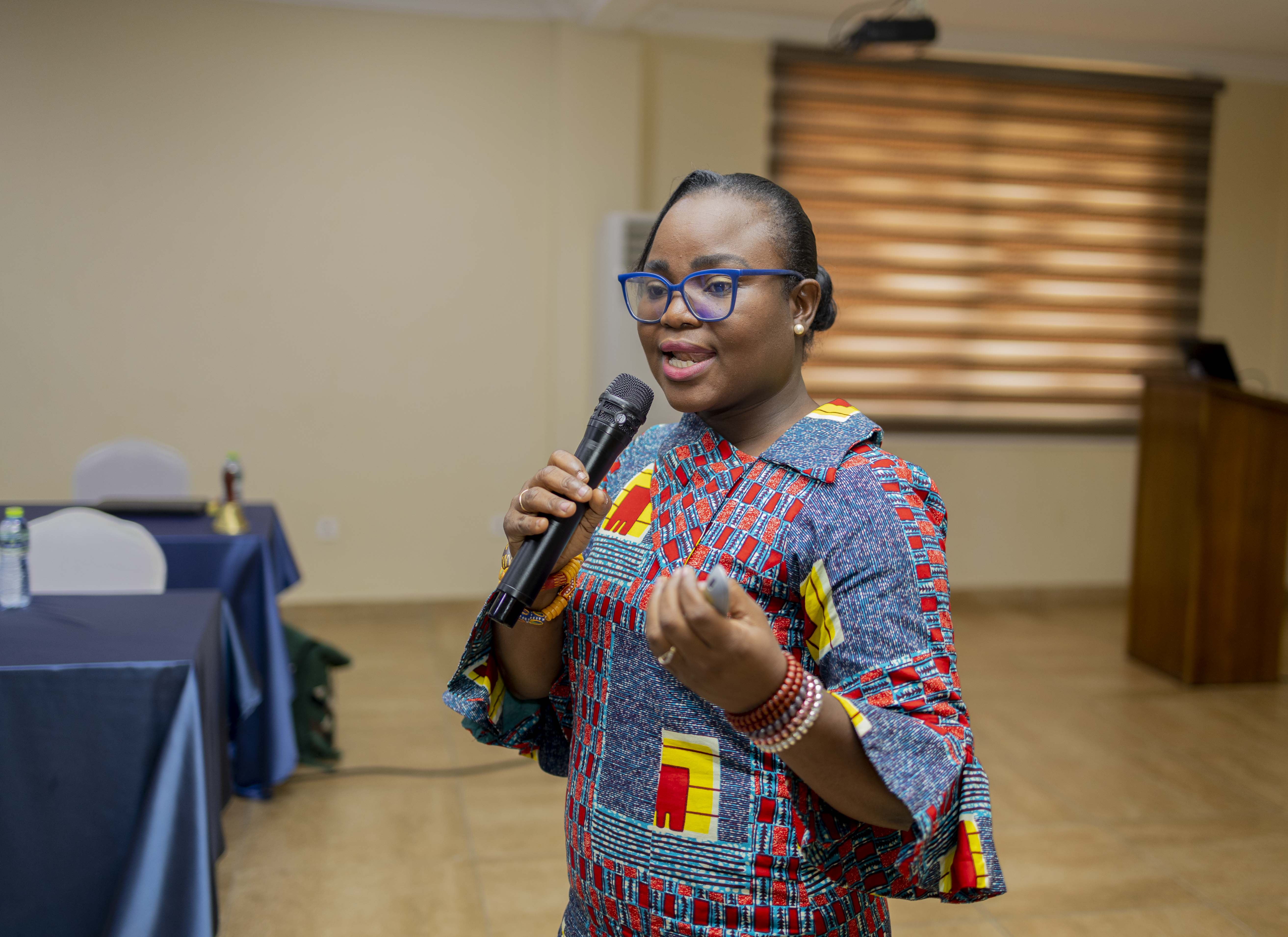
Dr. Princess Ruhama Acheampong, a lecturer at the Department of Health Promotion, has urged professionals to rethink conventional views on career progression, saying family life can serve as a catalyst rather than a barrier to professional advancement.
Speaking on the theme Family and Career Advancement at a staff retreat of the KNUST School of Public Health (SPH), Dr. Acheampong said career growth should be understood more broadly than promotions alone, encompassing skills development, leadership capacity, expanded professional networks and the assumption of new responsibilities.
She noted that effective career planning must reflect the different stages of life, arguing that professional strategies should evolve alongside personal circumstances.
Challenging perceptions that family responsibilities undermine career progress, Dr. Acheampong said family life can strengthen emotional intelligence, patience, empathy and conflict-resolution skills, describing these attributes as critical for effective leadership.
She added that strong family support systems can also play a key role in reducing burnout and sustaining long-term productivity.
She further encouraged staff to involve their families in their professional journeys, saying this fosters a sense of grounding and belonging that ultimately enhances motivation and commitment at work.
Outlining practical strategies for balancing work and family life, Dr. Acheampong highlighted the importance of clear communication with employers and relatives, realistic scheduling, shared domestic responsibilities, firm boundaries around late-night work and the pursuit of flexible work arrangements where feasible. She also urged staff to draw on extended family, friends and childcare support networks.
Faculty members at the retreat shared personal experiences, noting that strong family support systems had helped them manage academic and administrative demands more effectively.
The SPH retreat, now in its second day, continues to focus on strengthening teamwork, staff wellbeing and long-term capacity development across the School.


